
Opinion
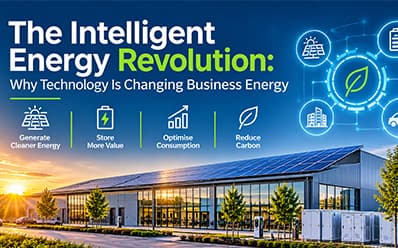
The Intelligent Energy Revolution: Why Technology Is Changing Business Energy
05-11-2026 · 3 min read
At a glance
- Today, the conversation is shifting from simply buying energy to understanding how it is generated, stored, distributed and consumed.
- At the centre of this transformation is technology.
Intelligent technology is changing the way businesses generate, manage and use energy, creating new opportunities to reduce costs, improve resilience, measure carbon emissions and unlock greater value from existing infrastructure. For many businesses, energy has traditionally been viewed as a necessary operating expense. Something to purchase, consume and pay for. But as energy markets evolve, costs remain unpredictable and pressure to reduce carbon emissions increases, that traditional approach is becoming increasingly outdated.
Today, the conversation is shifting from simply buying energy to understanding how it is generated, stored, distributed and consumed. At the centre of this transformation is technology. The future of business energy isn't just about generating more renewable electricity. It's about making smarter decisions with energy, understanding its environmental impact and using data to drive measurable improvements.
From energy consumption to intelligent energy management
The growth of onsite renewable generation, battery storage, electric vehicle charging and smart energy infrastructure is creating new opportunities for businesses to take greater control of their energy requirements. However, installing individual technologies is only part of the solution. Without intelligent management, businesses risk missing opportunities to maximise the value of their investments. Solar generation may not align with periods of peak demand, batteries may not be optimally charged or discharged, and EV charging infrastructure can place additional pressure on existing electrical capacity. This is where intelligent energy management systems (EMS) are becoming increasingly important.
By combining real-time monitoring, connected devices, data analytics and automated controls, businesses can gain a much clearer understanding of how energy moves around their operations and where improvements can be made. These systems can help businesses:
- Monitor energy generation and consumption in real time.
- Identify inefficiencies and unnecessary energy expenditure.
- Optimise battery charging and discharging.
- Coordinate EV charging around available capacity and energy prices.
- Maximise the use of locally generated renewable electricity.
- Identify opportunities to reduce energy-related carbon emissions.
- Identify opportunities to participate in demand flexibility and grid services.
The result is a more connected and responsive energy infrastructure, where decisions can be driven by actual performance data rather than assumptions.
Data is becoming one of the most valuable energy assets
Understanding when, where and how energy is used is fundamental to improving performance and reducing carbon emissions. Advanced monitoring and analytics can turn complex energy data into meaningful operational intelligence, helping businesses identify consumption patterns, forecast demand and make better-informed investment decisions. This data also plays an important role in corporate carbon measurement and reporting.
Businesses are increasingly expected to understand and report their greenhouse gas emissions across Scope 1, Scope 2 and Scope 3. Accurate energy consumption data provides an important foundation for calculating emissions, establishing carbon baselines and tracking progress against reduction targets.
Artificial intelligence is creating opportunities to take this further. By analysing historical consumption, weather forecasts, energy prices and operational requirements, intelligent systems can help predict future demand and optimise how energy assets operate.
For larger organisations managing multiple sites, this could provide a much more sophisticated view of energy and carbon performance across their entire property portfolio. Instead of managing individual buildings in isolation, businesses can begin to consider how their energy infrastructure operates as a connected system, with measurable improvements in both financial and environmental performance.
Beyond carbon reporting: turning measurement into reduction
Measuring carbon emissions is only the starting point. The real challenge for businesses is translating that information into meaningful reductions. Once organisations understand their emissions profile, they can identify the activities, buildings and processes responsible for the greatest environmental impact and prioritise where improvements will deliver the most value. This is where carbon insetting becomes particularly relevant.
Rather than relying solely on external carbon offsets, carbon insetting focuses on supporting emissions reductions within a business's own operations and value chain. For example, businesses could invest in onsite renewable generation, battery storage, energy efficiency improvements, electrification and lower-carbon infrastructure to reduce emissions associated with their activities. For organisations with multiple premises, this could also involve working with landlords, suppliers and operational partners to develop shared initiatives that deliver measurable carbon reductions across their wider value chain. By connecting energy management with carbon measurement, businesses can move beyond reporting emissions to actively managing and reducing them.
The convergence of energy and digital infrastructure
As businesses become increasingly dependent on connected energy systems, the relationship between energy infrastructure and digital technology is becoming closer. Smart buildings, automated energy controls, battery storage, EV charging networks and renewable generation all rely on connectivity, reliable data and secure digital infrastructure. This introduces new considerations around network resilience, cybersecurity, system integration and ongoing monitoring.
Energy technology must not only deliver financial and environmental benefits; it must also operate reliably, securely and consistently. The ability to connect physical infrastructure with intelligent digital systems is becoming an important part of future business resilience and sustainability performance.
Energy is becoming a strategic business asset
The businesses best positioned to benefit from the energy transition will be those that look beyond individual installations and consider the wider opportunities. A commercial property, manufacturing facility or retail park could combine rooftop solar, battery storage, EV charging and intelligent energy management to create a much more efficient onsite energy network. This creates opportunities to reduce reliance on purchased electricity, improve energy resilience, explore additional revenue streams, lower carbon emissions and make better use of existing assets. For property owners in particular, energy infrastructure could become an increasingly important consideration in long-term asset management, tenant attraction and property value.
A smarter approach to business energy
Technology is changing what businesses can expect from their energy infrastructure. The opportunity is no longer simply to install renewable technologies or negotiate a better electricity contract. It is to connect generation, storage, consumption, carbon measurement and management into one intelligent system. As energy and digital infrastructure continue to converge, businesses that invest in understanding and optimising their energy requirements will be better placed to manage costs, improve operational resilience, measure their environmental impact and deliver meaningful carbon reductions.
Energy is no longer just something businesses consume. Managed intelligently, it can become an asset that actively contributes to business performance, profitability and sustainability. Electric Horse™ helps businesses take control of their energy through integrated solutions spanning renewable generation, battery storage, EV charging, intelligent energy management and carbon reduction. From improving energy efficiency and reducing operational emissions to measuring carbon performance and identifying opportunities for carbon insetting, we help businesses turn energy and sustainability ambitions into practical, measurable outcomes. Get in touch with Electric Horse™ to explore how a smarter, more connected approach to energy could benefit your business.
Frequently asked questions
What is intelligent energy management?
Intelligent energy management uses connected technologies, monitoring systems and data analytics to help businesses understand, control and optimise how energy is generated, stored and consumed. It can integrate solar PV, battery storage, EV charging and building energy systems to improve efficiency, reduce costs and lower carbon emissions.